



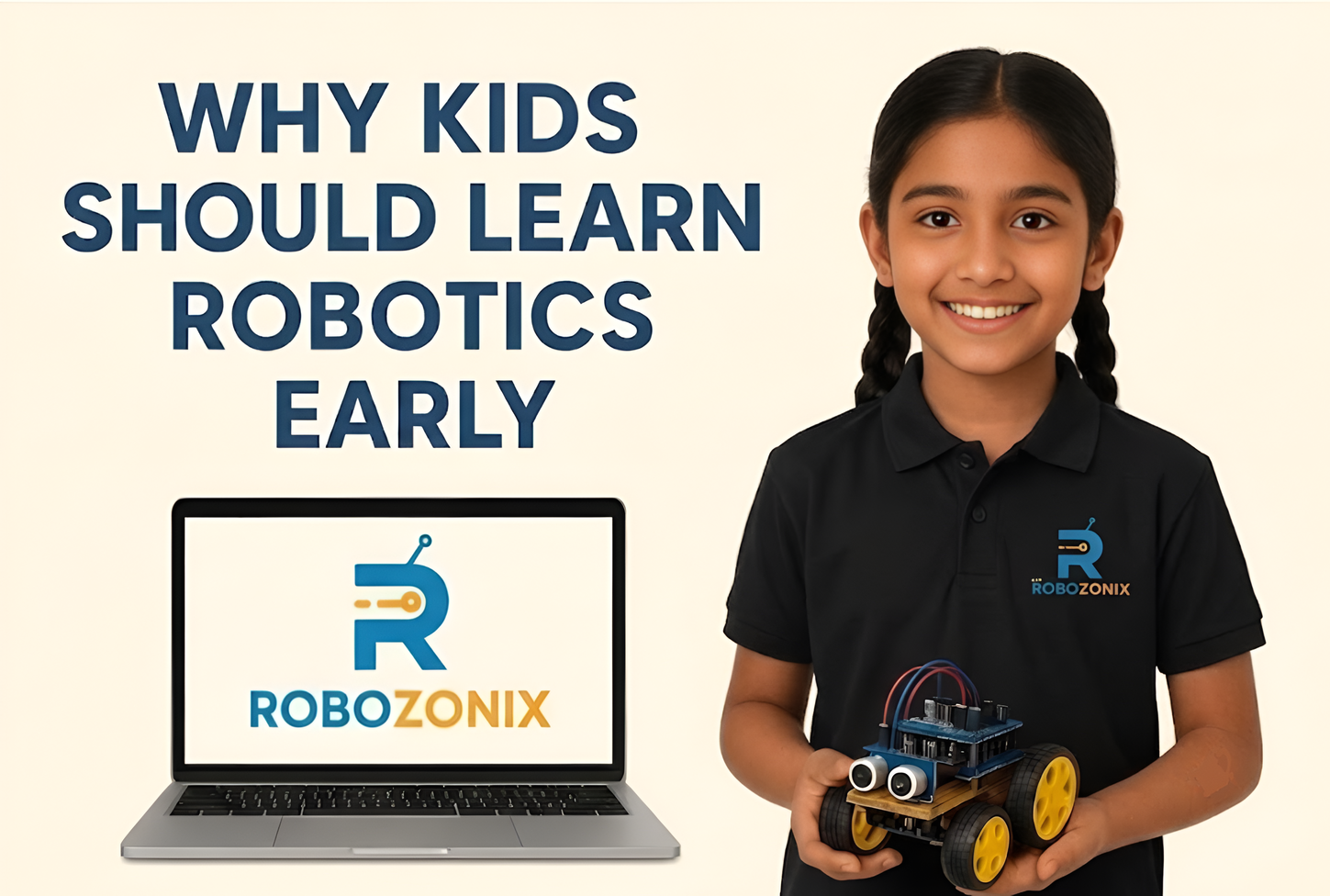
Why Kids Should Learn Robotics Early: Building Future Innovators Through Hands-On Learning
Why Kids Should Learn Robotics Early
Technology is transforming the world at an incredible pace, and robotics is leading this revolution. From self-driving cars and smart homes to automated healthcare and space exploration, robots are becoming an essential part of everyday life. As tomorrow's careers become increasingly driven by technology, introducing children to robotics at an early age is no longer just an exciting extracurricular activity—it's an investment in their future. Robotics empowers children to become creators, innovators, and confident problem-solvers rather than simply consumers of technology.
Turning Learning Into an Exciting Adventure
Traditional classroom learning often focuses on theory, leaving children wondering how concepts apply in the real world. Robotics changes that by bringing science, technology, engineering, and mathematics (STEM) to life through interactive, hands-on experiences.
When children write their first lines of code and watch a robot respond to their commands, learning becomes tangible, exciting, and memorable. Concepts such as programming, mathematics, electronics, and physics suddenly have real-world meaning. This practical approach encourages curiosity, keeps students motivated, and makes education enjoyable rather than overwhelming.
Developing Critical Thinkers and Creative Innovators
Robotics naturally encourages children to think critically. Every project presents new challenges that require planning, testing, troubleshooting, and improving. Instead of fearing mistakes, children learn that every error is an opportunity to learn and grow.
As their confidence increases, they begin designing their own robotic solutions—from obstacle-avoiding robots and automated vehicles to smart home devices and drones. Robotics nurtures creativity by giving children the freedom to transform their ideas into working inventions.
Building Teamwork, Communication, and Leadership Skills
Many robotics activities involve teamwork, where children collaborate to design, build, and program their projects. Working together teaches valuable life skills such as communication, cooperation, leadership, and respect for different perspectives.
These experiences prepare children for future academic and professional environments, where collaboration and problem-solving are just as important as technical knowledge.
Boosting Confidence Through Creation
One of the greatest advantages of robotics is the confidence it instills in young learners. Instead of simply using technology, children discover that they can build it.
Completing a robotics project gives them a genuine sense of achievement and encourages a growth mindset. They begin to believe in their abilities and gain the confidence to tackle increasingly complex challenges—not only in robotics but in every aspect of life.
Making Future Skills Accessible to Every Child
Thanks to beginner-friendly platforms such as Arduino, LEGO Education kits, Scratch, micro:bit, and other visual programming tools, robotics has never been more accessible. Children can start with simple projects like blinking LEDs or moving robots and gradually progress to intelligent autonomous systems.
This step-by-step learning journey ensures that every child—regardless of age or prior experience—can develop valuable STEM skills at their own pace while having fun.
Preparing Children for Tomorrow's Careers
The future workforce will demand skills that go beyond traditional academics. Robotics helps children develop computational thinking, coding, engineering fundamentals, adaptability, creativity, and analytical reasoning—skills that are becoming increasingly valuable across industries including artificial intelligence, automation, healthcare, aerospace, manufacturing, and software development.
Learning robotics today equips children with the confidence and technical foundation needed to thrive in tomorrow's technology-driven world.
The RoboZonix Vision
At RoboZonix, we believe every child has the potential to become an innovator. Our mission is to make robotics education engaging, accessible, and inspiring through hands-on learning experiences that spark curiosity and creativity.
By introducing robotics at an early age, we help children build not only technical knowledge but also confidence, resilience, teamwork, and a lifelong passion for innovation. Today's young learners are tomorrow's engineers, inventors, entrepreneurs, and leaders—and their journey begins with a single robot.